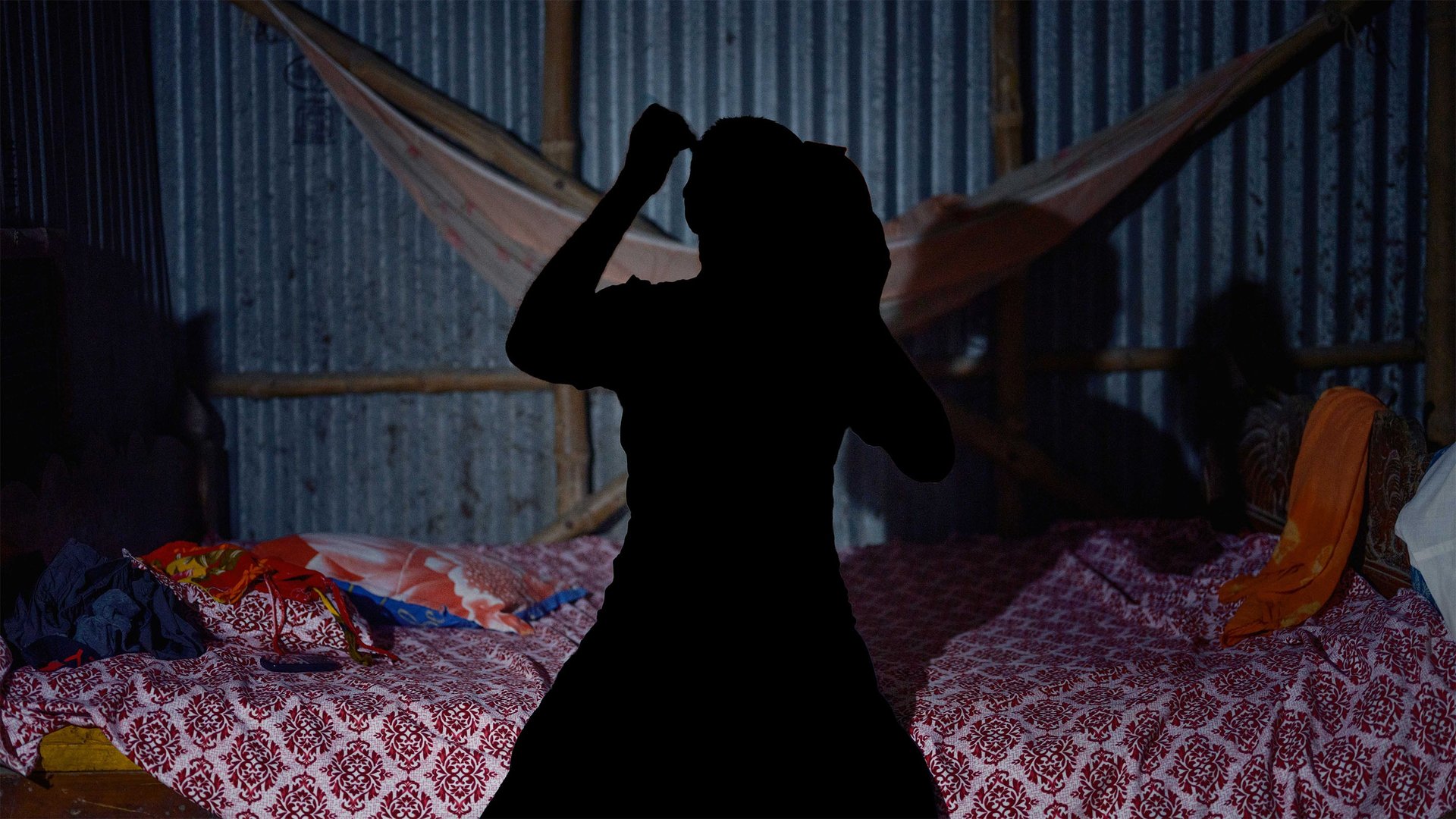
Men from Borderland is an ongoing photo project rooted in my ancestral ties and the partition of Bengal during India’s independence. Along the India-Bangladesh border, pockets of land—enclaves and narrow strips- remain on the other side of the border fence, where many Indian citizens continue to live. Some refuse to sever ties with their ancestral land, while others are powerless against larger forces, with little to no structured effort by the authorities to relocate them inward. Among those stranded, a prevailing belief is that the authorities are merely waiting for them to die off rather than seeking an active solution for them.
2024 - ongoing WB, India
After independence in 1947, the Radcliffe Line created a geopolitical divide along the west and east of India, defining Pakistan and what is now known as Bangladesh. That invisible line incidentally ran through my grandfather’s village. The home, where my father was born and where my mother moved after marriage, lies in one such pocket, where nearly 200 families remain stranded, including one of my uncles. Decades after the violent migrations that followed Partition and later the liberation of East Pakistan, displacement persists. As security forces tighten their grip to curb illegal migration and black-market trade, movement and resources have become increasingly restricted. Livelihoods are strangled, where a curfew-like existence has become the norm. After sundown, a series of floodlights are pointed toward their homes. Families are given ration books to track even basic household necessities. Most of the younger generation has left in search of freedom and opportunity elsewhere.
While I grew up in this region, I’ve also had the privilege of experiencing life beyond its constraints. This put me in a vantage point close to the subject while allowing enough distance to remain objective. Still, reconciling the harsh realities imposed on these families with basic human rights is often difficult. This project seeks to document the lives of my people, their resilience, and the fragile yet enduring connection they maintain with the land that once defined them and continues to sustain them. This work is a meditation on loss, the loss of land, freedom of movement, and cultural continuity, woven through the stories of thousands who remain trapped in similar circumstances along the border, their histories and futures shaped by lines drawn across a land that once flowed freely.